Study reveals how brain cancer evolves in response to treatment  (Links to an external site)

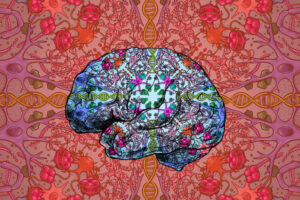
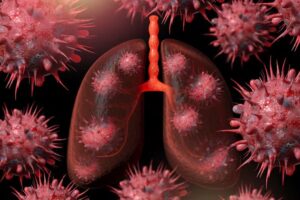
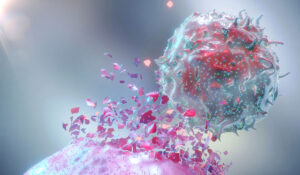
cancer cell graphic

Researchers at Washington University School of Medicine in St. Louis have shown how brain tumors evolve in response to therapy, helping describe how such cancers develop treatment resistance that leads to the high mortality rate characteristic of this cancer. Only 5% of patients survive five years after diagnosis with the most aggressive brain cancers.  

DNA fragments help detect kidney organ rejection  (Links to an external site)

Tarek Alhamad, MD, MS

Raja Dandamudi, MD, an assistant professor of pediatrics, Vikas Dharnidharka, MD, a professor of pediatrics, and Tarek Alhamad, MD, a professor of medicine at Washington University School of Medicine in St. Louis, contributed to a large study that identified a novel way of detecting signs of organ rejection. The international team found that DNA shed from dying […]

Meet the Researcher: Marlie Maestas  (Links to an external site)

Marlie Maestas

Marlie Maestas, a fifth-year graduate student in the Millman Lab, recently published her first first-authorship in Nature Communications. The study, titled Identification of unique cell type responses in pancreatic islets to stress, detailed the responses of different pancreatic islet cell types to endoplasmic reticulum and inflammatory stress.

Anuja Java Published in Science Direct

Anuja Java, MD

Anuja Java, MD, Associate Professor of Medicine, Director, Kidney Transplant John Cochran VA Medical Center, Division of Nephrology, Washington University School of Medicine recently had two articles published in Science Direct. Thrombotic Microangiopathies and the Kidney Both articles delve into defining current understanding of the pathophysiological mechanisms underlying Thrombotic Microangiopathies (TMAs). TMA is a multisystem […]

Heme-Onc Fellow Cochran published in Leukemia & Lymphoma

Hunter Cassidy Cochran, MD

Pretransplant desensitization of donor-specific anti-HLA antibodies with plasmapheresis and immunoglobulin produces equivalent outcomes to patients with no donor specific antibodies in haploidentical hematopoietic cell transplant Hunter Cassidy Cochran, MD, Hematology-Oncology Fellow, was recently published in Leukemia & Lymphoma. In many hematologic malignancies, hematopoietic cell transplant (HCT) is the only curative option. The likelihood of finding […]

DOLF Initiating a Follow Up Study on Moxidectin plus Albendazole (MoxA) Combination Treatment for Lymphatic Filariasis and Onchocerciasis in Cote d’Ivoire (Links to an external site)

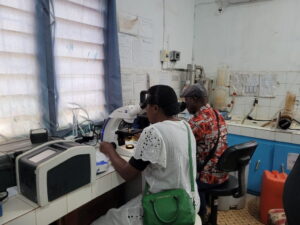
Members of the DOLF team looking for microfilariae in samples

DOLF investigators are beginning a follow-up study on the efficacy of a new combination treatment for lymphatic filariasis (LF) and onchocerciasis in the Akoupé district of Côte d’Ivoire. This study began July 4th and builds upon a large-scale community survey sponsored by Medicines Development for Global Health (MDGH).

DOM researchers publish in Science Immunology

Researchers in the Department of Medicine reveal new ways that human natural killer (NK) cells are rewired by signals through cytokine receptors to generate a memory-like program.  In a report published in Science Immunology, co-first authors Jennifer Foltz, PhD, and Jennifer Tran build on prior work from senior author Todd Fehniger, MD, PhD, WashU Division […]

Kulkarni Editorial Published in Journal of Clinical Investigation

Hrishikesh S. Kulkarni, MD

“Hexamerization: explaining the original sin of IgG-mediated complement activation in acute lung injury” Hrishikesh S Kulkarni, MD, MSCI, Associate Professor of Medicine and Molecular Microbiology; Associate Program Director for Research, Division of Pulmonary and Critical Care Medicine, recently was published in the Journal of Clinical Investigation (JCI). The editorial in the Journal of Clinical Investigation […]

Hughes Lab publication highlighted in Science Snapshot

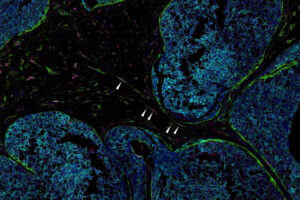
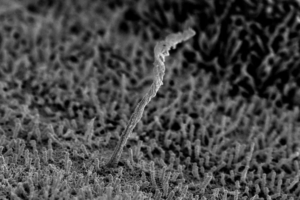
Researchers used scanning electron microscopy to image the cytoskeletal components of the human pancreatic primary cilia.

Three dimensional images of human pancreatic islet cells provide an unprecedented view of the enigmatic primary cilia Jing Hughes, MD, Assistant Professor of Medicine, Division of Endocrinology, Metabolism & Lipid Research recent paper, “Scanning electron microscopy of human islet cilia” was published in Proceedings of the National Academy of Sciences (PNAS) and follow-up article, “Immuno-scanning […]

Outcomes of Hematology/Oncology Clinical Trials Development Program Published by Co-Chief Fellow Christine Auberle (Links to an external site)

Christine Auberle, MD

“Integration of Clinical Trial Development in Hematology-Oncology Fellowship Training” describes the Clinical Trial Development Program initiated at Washington University School of Medicine in 2002. This program was developed as a hands-on learning experience for Hematology-Oncology fellow in the design, implementation and publication of clinical trials and is led by Dr. Lee Ratner, Associate Program Director […]

Petersen study of cardiometabolic health in obesity published in Cell Metabolism

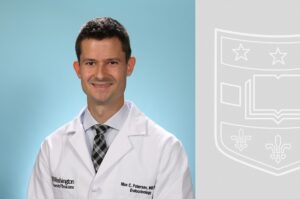
Max Peterson, MD, PhD

Max Petersen, MD, PhD, Instructor in Medicine, Division of Endocrinology, Metabolism & Lipid Research, recently published a paper, Cardiometabolic characteristics of people with metabolically healthy and unhealthy obesity, in Cell Metabolism. The senior author of the study was Samuel Klein, MD, the William Danforth Professor of Medicine, and Chief of the Division of Nutritional Science & […]

Disrupting Type One Diabetes

Jeffrey Millman, PhD

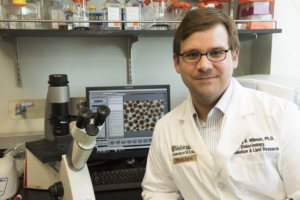
(interview with Dr. Jeff Millman) Tell Us About Yourself My name is Jeff Millman, PhD, and I am a bioengineer within the Division of Endocrinology, Metabolism and Lipid Research in the Department of Medicine here at WashU. My bioengineering expertise uniquely positions me to pioneer research in a laboratory environment, with a steadfast commitment to […]

Dr. Jeffrey Miner’s Research Group Lands KI Journal Cover (Links to an external site)

Jeffrey H. Miner, PhD, FASN

Congratulations to the research group headed by Jeffrey Miner, PhD, on their recent publication that landed the cover of Kidney International.  The colorful cover photograph, illustrating paraffin immunofluorescence of different collagen IV chains, is a figure from their article “Quantitative assessment of glomerular basement membrane (GBM) collagen IV α chains in paraffin sections from patients with focal segmental glomerulosclerosis […]

High-Dimensional Analyses Reveal IL-15 Enhances Prostate Cancer Immunotherapy

Russell Pachynski, MD

Prostate cancer cellular immunotherapy Russell Pachynski, MD, Associate Professor of Medicine, Division of Oncology, Director of Genitourinary (GU) Oncology Research, Washington University School of Medicine in St. Louis, published a paper in Cancer Immunology Research (“High dimensional analyses reveal activation of lymphocyte subsets and reversal of immunoresistance by cytokine-enhanced cellular vaccine therapy in prostate cancer”) […]

HIV Clinicians Represent Critical Point of Access for Treatment of Substance Use

Aditi Ramakrishnan, MD

Aditi Ramakrishnan, MD MSc, Assistant Professor in the Division of Infectious Diseases and Department of Medicine at the Washington University in St. Louis School of Medicine, had a first-author publication in Journal of Acquired Immune Deficiency Syndrome (JAIDS), a premier infectious diseases journal, describing the substance use treatment engagement among women with HIV in the […]

Mbalaviele Lab Published in eLife (Links to an external site)

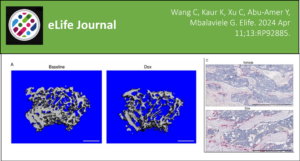
Mbalaviele Lab Published in eLife

The Mbalaviele lab and collaborators found that inflammasomes play a critical role in bone loss in mice caused by the chemotherapeutic drug, doxorubicin. This finding may inspire the development of a tailored adjuvant therapy that preserves the quality of this tissue in patients treated with this class of drugs.

ACC Updates HFrEF Decision Pathway, Reinforcing the Four Pillars of Therapy

Thomas M. Maddox, MD

The document also strengthens advice regarding which medications should be started in all patients Thomas M. Maddox, MD, MSc, Professor of Medicine in the Cardiovascular Division at WashU Medicine, and colleagues recently published an Expert Consensus Decision Pathway (ECDP) for the many decisions required in the management and treatment of patients with heart failure with […]

Scheller Lab and Colleagues Published in JCI Insight (Links to an external site)

Erica Scheller, DDS, PhD

Members of the Scheller Lab in collaboration with the Milbrandt and DiAntonio groups at WashU published a paper in JCI Insight in which they found that loss of Sarm1 could completely protect female mice against the development of bone loss and severe osteoblast suppression secondary to type 1 diabetes. 

In vivo ablation of NFκB cascade effectors alleviates disease burden in myeloproliferative neoplasms

Stephen T. Oh, MD, PhD

Study in Blood dissecting the role of NFκB signaling effectors in MPN disease biology Stephen T. Oh, MD, PhD, Co-Chief and Associate Professor of Medicine, Division of Hematology, Department of Medicine, Washington University School of Medicine in St. Louis, and has been published in Blood. The WashU group of researchers previously identified hyperactivation of NFκB […]

WashU Kidney O’Brien Center Takes CKD Research to the Next Level through Team Science (Links to an external site)

Washington University Kidney O’Brien Center for Chronic Kidney Disease Research

Chronic kidney disease (CKD) is a highly under-recognized disease that affects almost 15% of the US population and carries significant morbidity and mortality.  Although important scientific advances promise to accelerate CKD research, many are not accessible to the kidney research community due to limited expertise and/or the need for expensive equipment.

Radiation therapy may be potential heart failure treatment (Links to an external site)

Radiotherapy may improve heart function by reducing inflammatory immune cells Cardiologists and radiation oncologists at Washington University School of Medicine in St. Louis pioneered the use of radiation therapy — a strategy typically used against cancer — to treat patients with a life-threatening abnormal heart rhythm called ventricular tachycardia.

Researchers identify way to block alphavirus infection (Links to an external site)

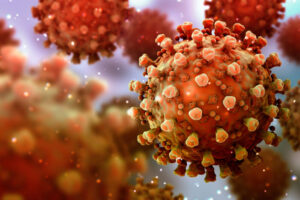
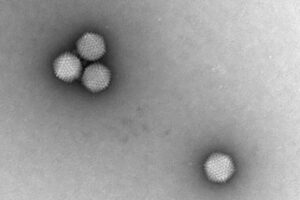
Researchers at Washington University School of Medicine in St. Louis have found an innovative way to block infection by a variety of alphaviruses, a group of mosquito-borne viruses that can cause joint and brain infections in people. The study, led by Michael S. Diamond, MD, PhD, the Herbert S. Gasser Professor of Medicine, and Daved […]

Ying Maggie Chen Lab and Collaborators Uncover Biotherapeutic Properties of MANF Protein (Links to an external site)

Ying (Maggie) Chen, MD, PhD

In their newly-published article in Nature Communications, a multi-center group led by Ying Maggie Chen, MD, PhD, WashU Division of Nephrology, describes previously unknown mechanisms of action of mesencephalic astrocyte-derived neurotrophic factor (MANF) and its therapeutic function, with regards to kidney disease.  MANF is a secreted endoplasmic reticulum (ER) protein that possesses cytoprotective properties.