Genetic lung disease’s molecular roots identified (Links to an external site)

Respiratory infections peak during the winter months, and most people recover within a few weeks. But for those with a rare genetic lung disease, the sniffling, coughing and congestion never end. The tiny hairlike structures called cilia that normally sweep mucus through the airways don’t work properly in people with what’s known as primary ciliary […]

Memory loss from West Nile virus may be preventable (Links to an external site)

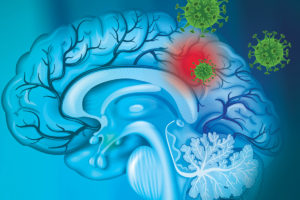
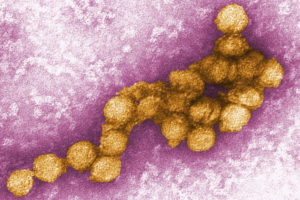
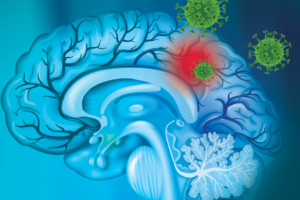
More than 10,000 people in the United States are living with memory loss and other persistent neurological problems that occur after West Nile virus infects the brain. Now, a new study in mice suggests that such ongoing neurological deficits may be due to unresolved inflammation that hinders the brain’s ability to repair damaged neurons and […]

Study prompts new ideas on cancers’ origins (Links to an external site)

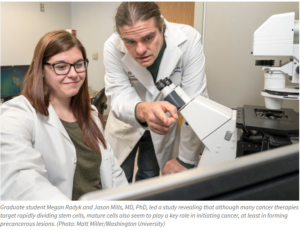
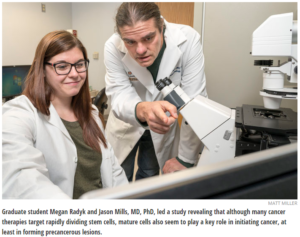
Rapidly dividing, yet aberrant stem cells are a major source of cancer. But a new study suggests that mature cells also play a key role in initiating cancer — a finding that could upend the way scientists think about the origins of the disease. Researchers at Washington University School of Medicine in St. Louis have […]

Highlights from December

Our glioblastoma-Zika paper made it in the top 100 Altmetric list of most popular research of 2017. In collaboration with Mike Diamond and Pei-Yong Shi (Texas), we got the Kleberg Foundation award.  We received the CT RFP 50K award from Wash U ICTS, to study cancer stem cell populations fresh from patients, using new CyTOF […]

Study prompts new ideas on cancers’ origins (Links to an external site)

Rapidly dividing, yet aberrant stem cells are a major source of cancer. But a new study suggests that mature cells also play a key role in initiating cancer — a finding that could upend the way scientists think about the origins of the disease. Researchers at Washington University School of Medicine in St. Louis have […]

Deadly heart rhythm halted by noninvasive radiation therapy (Links to an external site)

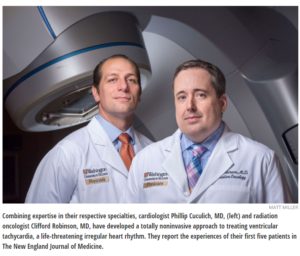
Radiation therapy often is used to treat cancer patients. Now, doctors at Washington University School of Medicine in St. Louis have shown that radiation therapy — aimed directly at the heart — can be used to treat patients with a life-threatening heart rhythm. They treated five patients who had irregular heart rhythms, called ventricular tachycardia, […]

WashU research spurs new WHO guidelines for disabling tropical disease (Links to an external site)

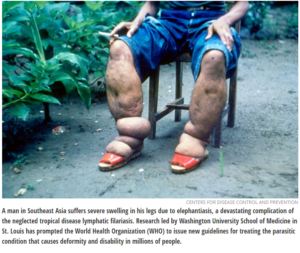
Research led by Washington University School of Medicine in St. Louis has prompted the World Health Organization (WHO) to issue new treatment guidelines aimed at accelerating global elimination of lymphatic filariasis – a devastating tropical disease. An estimated 70 million people worldwide are infected with lymphatic filariasis, a parasitic disease spread by mosquitoes. The disease […]

Kidney disease increases risk of diabetes, study shows (Links to an external site)

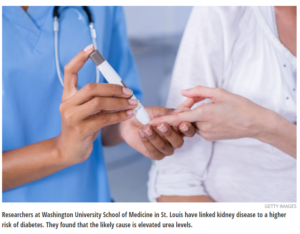
Diabetes is known to increase a person’s risk of kidney disease. Now, a new study from Washington University School of Medicine in St. Louis suggests that the converse also is true: Kidney dysfunction increases the risk of diabetes. Further, the researchers deduced that a likely culprit of the two-way relationship between kidney disease and diabetes […]

$6 million supports leukemia research (Links to an external site)

John F. DiPersio, MD, PhD, of Washington University School of Medicine in St. Louis, has received a $6 million outstanding investigator award from the National Cancer Institute (NCI) of the National Institutes of Health (NIH) to support research aimed at improving therapies for leukemia. DiPersio, the Virginia E. and Sam J. Golman Professor of Medicine […]

Key malaria parasite findings could lead to new treatments (Links to an external site)
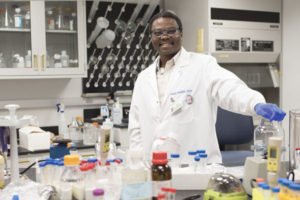
Sebastian Nasamu, an MD/PhD student at Washington University School of Medicine in St. Louis, battled successive bouts of malaria as a child growing up in Ghana. He survived ­– but decided long ago to commit himself to eradicating the disease. The possibility that his work could lead to a treatment is the reason he goes […]

New gene-altering treatment offered for certain blood cancers (Links to an external site)
“This is the beginning of a new era of cancer therapy,” said Washington University oncologist Armin Ghobadi, MD, an assistant professor of medicine, who treats patients at Siteman. “With CAR-T cell therapy, we can take patients’ own cells and turn them into a powerful weapon to attack cancer. It’s a highly personalized, innovative therapy and one […]

Portable 3-D scanner assesses patients with elephantiasis (Links to an external site)
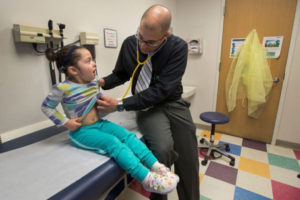
An estimated 120 million people worldwide are infected with lymphatic filariasis, a parasitic, mosquito-borne disease that can cause major swelling and deformity of the legs, a condition known as elephantiasis. Health-care workers rely on leg measurements to assess the severity of the condition. However, measuring legs that are severely swollen often proves cumbersome and impractical. […]

Breathing dirty air may harm kidneys (Links to an external site)
Outdoor air pollution has long been linked to major health conditions such as heart disease, stroke, cancer, asthma and chronic obstructive pulmonary disease. A new study now adds kidney disease to the list, according to researchers at Washington University School of Medicine in St. Louis and the Veterans Affairs (VA) St. Louis Health Care System. […]

Genetic testing helps set safe dose of common blood thinner (Links to an external site)
Warfarin is a blood thinner that is commonly prescribed to patients to prevent life-threatening blood clots. Despite its longtime use, warfarin remains tricky to dose because a person’s genetic makeup influences how the drug is processed in the body. Too much warfarin can cause internal bleeding; too little warfarin fails to prevent blood clots. Now, […]

Pet, pest allergens linked to reduced asthma risk (Links to an external site)
A new study of children living in inner-city areas and at high risk of developing asthma suggests that exposure to certain pet and pest allergens in infancy lowers the risk of developing asthma by age 7. The research also provides evidence that the type of bacteria hitching a ride on the allergen particles is an […]

Potential new therapy relieves chronic itch (Links to an external site)
The roots of chronic itching have long remained a mystery. Meanwhile, those with the condition suffer from an unrelenting and sometimes debilitating urge to scratch. Now, new research at Washington University School of Medicine in St. Louis has identified immune signaling molecules that are essential for activating neurons in the skin to cause chronic itching.

Type of sugar may treat atherosclerosis, mouse study shows

A new study shows that a type of natural sugar called trehalose triggers an important cellular housekeeping process in immune cells that helps treat atherosclerotic plaque.Read the full story on the School of Medicine’s site »

Rare gene mutations inspire new heart drugs

What if you carried a genetic mutation that left you nearly impervious to heart disease? What if scientists could bottle that and use it to treat everyone else?  Read full story »

Cancer drug may help patients with severe asthma

A new study co-authored by Mario Castro, MD, suggests a targeted cancer drug called imatinib (Gleevec) may help some patients with severe asthma who do not respond to standard therapy. Read the full story on the School of Medicine’s site »

New imaging technique aims to ensure surgeons completely remove cancer

A new imaging technique based on light and sound produces images doctors can use to distinguish cancerous breast tissue (below the dotted blue line) from normal tissue more quickly than is currently possible. Read the full story on the School of Medicine’s site »