First cell treatment to fight the coronavirus awaits FDA approval for clinical trial (Links to an external site)

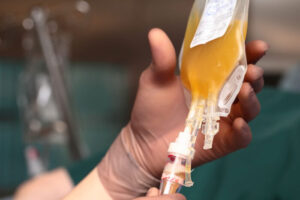
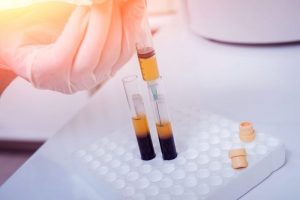
With no drugs or vaccines yet approved for COVID-19 and the number of U.S. cases increasing by the thousands every day, doctors are looking to revive a century-old therapy for infectious diseases: transfusing antibodies from the blood of recovered patients into people who are seriously ill. During the Spanish flu pandemic of 1918, doctors were […]
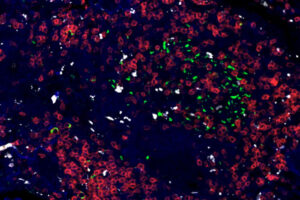
Immunotherapy that involves treating cancer with the body’s own immune cells, or those of a matched donor, shows promise in clinical trials for some patients, but not all. A new study from Washington University School of Medicine in St. Louis suggests that the age of certain immune cells used in such therapy plays a role […]
A component of breast milk may help protect premature babies from developing sepsis, a fast-moving, life-threatening condition triggered by infection. Researchers at Washington University School of Medicine in St. Louis and Mayo Clinic in Rochester, Minn., have found — in newborn mice — that a molecule called epidermal growth factor in breast milk activates receptors […]
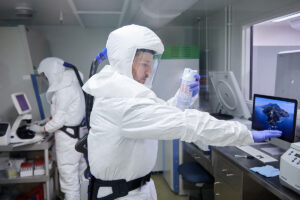
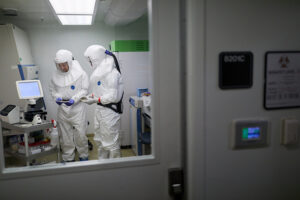
Soon after a novel coronavirus first appeared in China in late 2019, researchers, doctors and staff at Washington University School of Medicine in St. Louis began preparing for the possibility of an outbreak. Infectious disease physicians started planning how to respond if a person with suspected exposure to the virus arrived on campus, and researchers […]
New research in mice suggests that certain immune cells may help guide fetal development of the heart and play a role in how the adult heart beats, according to new research at Washington University School of Medicine in St. Louis. The findings, published in the journal JCI Insight, may help lay a foundation for immunotherapies […]
Researchers at Washington University School of Medicine in St. Louis appear to have discovered a way to make radiation therapy for colorectal cancer more effective by inhibiting a protein found in cancer cells in the gut. The approach also helps protect healthy tissue from the negative effects of radiation. Studying cells, mice and tumor samples […]
The aggravating skin condition eczema is most commonly treated by suppressing the immune system, but not all patients get relief. Now, a drug strategy aimed at revving up the immune system and boosting a type of immune cell known as natural killer cells appears, at least in mice, to effectively treat eczema. The innovative approach, […]
Researchers have converted human stem cells into insulin-producing cells and demonstrated in mice infused with such cells that blood sugar levels can be controlled and diabetes functionally cured for nine months. The findings, from researchers at Washington University School of Medicine in St. Louis, are published online Feb. 24 in the journal Nature Biotechnology. “These […]
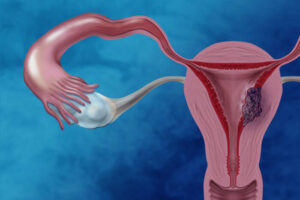
A new study that reveals the dozens of molecular changes that bring about endometrial cancer offers insight into how physicians might be able to better identify which patients will need aggressive treatment and why a common treatment is not effective for some patients. The study appears Feb. 13 in the journal Cell. Funded by the […]
Tuberculosis (TB) is one of the world’s most vexing public health problems. About 1.5 million people died from this bacterial lung infection in 2018, and the World Health Organization (WHO) estimates that one-quarter of the world’s population — some 2 billion people, mostly in developing countries — are infected with the bacteria that causes TB. […]
High-protein diets may help people lose weight and build muscle, but a new study in mice suggests they have a down side: They lead to more plaque in the arteries. Further, the new research shows that high-protein diets spur unstable plaque — the kind most prone to rupturing and causing blocked arteries. More plaque buildup […]
Their mother’s death when they were teenagers set identical twins Obi and Malachi Griffith on a shared path to find better cancer therapies. Today, the twins, both geneticists and computational biologists at the School of Medicine, are seeking precision treatments for the disease. The Griffith Lab, driven by the twins’ independent and complementary research interests, […]
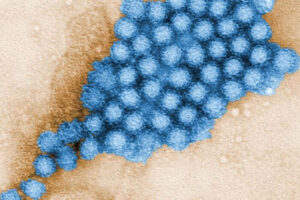
The highly contagious norovirus causes diarrhea and vomiting and is notorious for spreading rapidly through densely populated spaces, such as cruise ships, nursing homes, schools and day care centers. Each year, it is responsible for some 200,000 deaths, mostly in the developing world. There are no treatments for this intestinal virus, often incorrectly referred to […]
In critically ill patients who require a heart pump to support blood circulation as part of stent procedures, specific heart pumps have been associated with serious complications, according to a new study led by cardiologists at Washington University School of Medicine in St. Louis. Though the observational study does not prove that the heart pumps […]
Studying mice, scientists have shown that boosting the activity of specific immune cells in the heart after a heart attack can protect against developing heart failure, an invariably fatal condition. Patients with heart failure tire easily and become breathless from everyday activities because the heart muscle has lost the ability to pump enough blood to […]
Benjamin D. Humphreys’ hobbies include experimenting with international cuisine in his kitchen, harvesting heirloom tomatoes in his backyard, and growing miniature kidneys in his laboratory. He has been perfecting his first two hobbies for years. However, his interest in growing tiny kidneys — specifically, using human stem cells to cultivate kidney organoids — began in […]
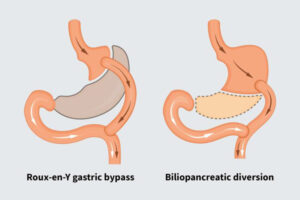
As obesity rates climb, so do the number of people receiving weight-loss surgery. One of the most frequently performed weight-loss procedures in the world — Roux-en-Y gastric bypass — is effective, but another procedure rarely performed in the U.S. is more effective at eliminating type 2 diabetes in patients with obesity. A new study from […]
At nearly 250 pounds, Linda DeCosta had tried everything — and failed — to lose weight: prescription drugs, exercise programs, dieting. She had even considered bariatric surgery, but insurance wouldn’t cover it. “I was almost starving myself,” DeCosta said. “Our family doesn’t eat out a lot. I don’t cook a lot of fried foods. I […]
Bloodstream infections caused by the fungus Candida are among the most common and deadly infections in hospitals, with 25,000 such cases seen annually in the U.S. – mostly in people originally hospitalized for other reasons. About 40% to 45% of people with Candida in their blood die of the infection. New research from Washington University School of Medicine in […]
Certain human gut microbes with links to health thrive when fed specific types of ingredients in dietary fibers, according to a new study from Washington University School of Medicine in St. Louis. The work — conducted in mice colonized with human gut bacteria and using new technologies for measuring nutrient processing — is a step […]
Scientists at Washington University School of Medicine in St. Louis appear to have solved a decades-long mystery regarding the precise biochemical pathway leading to a fatal genetic disorder in children that results in seizures, developmental regression and death, usually around age 3. Studying a mouse model with the same human illness — called Krabbe disease […]
A single high dose of radiation aimed at the heart significantly reduces episodes of a potentially deadly rapid heart rhythm, according to results of a phase one/two study at Washington University School of Medicine in St. Louis. Patients in the study were severely ill and had exhausted other standard treatment options. The radiation used to […]
The battle against HIV increasingly looks winnable, and Washington University in St. Louis is helping lead the charge. Rupa Patel, MD, an assistant professor of medicine, has received a grant for $3.9 million from the Centers for Disease Control and Prevention (CDC) to establish a regional resource center at the university to aid HIV prevention efforts […]
Zika virus can cause babies to be born with devastating brain damage. But the signs of Zika infection in adults – rash, fever, headache and body aches – are nonspecific, so a pregnant woman who develops such symptoms can’t be sure if she has contracted Zika or something less risky for her fetus. A diagnostic […]
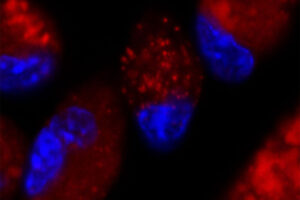
Since chikungunya virus emerged in the Americas in 2013, it has infected millions of people, causing fever, headache, rash, and muscle and joint pain. For some people, painful, debilitating arthritis lasts long after the other symptoms have resolved. Researchers have suspected that the virus or its genetic material – in this case, RNA – persist […]
A new study from Washington University School of Medicine in St. Louis supports evidence that children with mild asthma can effectively manage the condition by using their two inhalers — one a steroid and the other a bronchodilator — when symptoms occur. This is in contrast to the traditional method of using the steroid daily, […]
Antibiotics are known to upset the balance of bacteria in the intestinal tract. In some cases, antibiotics can cause the bacterium Clostridium difficile (C. difficile) to overgrow wildly, causing diarrhea and, in severe cases, life-threatening intestinal inflammation. Researchers at Washington University School of Medicine in St. Louis have found the molecular signature of a healthy gut microbial […]

Pancreatic cancer is especially challenging to treat – only eight percent of patients are still alive five years after diagnosis. Chemotherapy and radiation therapy are of limited benefit, and even immunotherapy – which revolutionized treatment for other kinds of cancer by activating the body’s immune system to attack cancer cells – has been largely ineffective because […]
Only a few cases of the newly discovered Bourbon virus have been reported, and two of them ended in death, partly because no specific treatments are available for the tick-borne illness. Now, researchers at Washington University School of Medicine in St. Louis have identified an experimental antiviral drug that cures mice infected with the potentially […]
Extended use of popular drugs to treat heartburn, ulcers and acid reflux has been associated with an increased risk of premature death. However, little has been known about the specific causes of death attributed to the drugs. Now, a study by researchers at Washington University School of Medicine in St. Louis and Veterans Affairs St. […]
COX’S BAZAR DISTRICT, Bangladesh — From high atop barren hills and the crests of skinny, rutted roads, the views of the vast camps that serve as makeshift homes to more than 900,000 Rohingya refugees are staggering. In every direction, stretches of hastily built, criss-crossed bamboo walls and roofs hold in place dirty orange, blue, black […]
Cysts likely to become cancerous identified with 95% accuracy
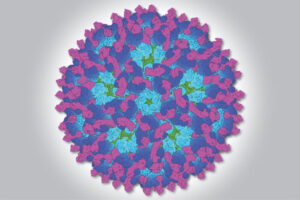
KATHERINE BASORE Researchers at Washington University School of Medicine in St. Louis have created a detailed 3-D structure of chikungunya virus (shown in blue and green) attached to a mouse protein (in magenta) that the virus uses to get inside cells and cause disease. The findings could accelerate efforts to find new ways to prevent […]
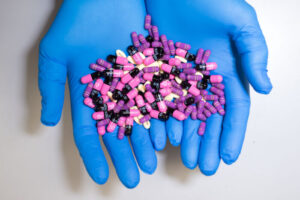
MATT MILLER Robert D. Schreiber, PhD, right, consults with doctoral student Samuel O. Ameh. Their work exploring the immune system’s role in controlling cancer is fueling development of a range of approaches to cancer immunotherapy. A few short decades ago, cancer treatment consisted mainly of three pillars: surgery, radiation and chemotherapy. Although each has earned […]
A diet high in fats and sugars is known for its unhealthy effects on the heart. Scientists now have found that a high-fat, high-sugar diet in mouse mothers before and during pregnancy causes problems in the hearts of their offspring, and that such problems are passed down at least three generations, even if the younger […]
A combination of two topical creams already shown to clear precancerous skin lesions from sun-damaged skin also lowers the risk that patients will later develop squamous cell carcinoma of the skin. The study, from Washington University School of Medicine in St. Louis, Massachusetts General Hospital, and Harvard Medical School, appears March 21 in JCI Insight. […]
The influenza vaccine is only good for one flu season, partly because different strains of the virus circulate every year. But there’s another reason people must roll up their sleeves every fall for a flu shot: The protection generated by the vaccination is fleeting, with evidence indicating that its effectiveness wanes over the course of […]
Tests to detect urinary tract infections (UTI) often are performed routinely in hospitals, even when patients don’t have symptoms. Such testing “just to be safe” can return results that lead doctors to prescribe antibiotics when there’s little to no evidence to warrant such treatment. Now, new research indicates that making a simple change to the […]
Scientists working to develop more effective treatments for diabetes are turning to stem cells. Such cells can be transformed into cells that produce insulin, the hormone that controls blood sugar. But there’s a major challenge: the amount of insulin produced by theses cells is difficult to control. Now, by tweaking the recipe for coaxing human […]
Isotretinoin, a form of vitamin A, has been prescribed to treat acne for decades. It reduces oil production in the skin, which helps prevent acne from forming. But new research from Washington University School of Medicine in St. Louis has uncovered a previously unknown benefit of the medication. It shifts the skin microbiome of acne […]
Washington University researchers are working to develop artificial intelligence (AI) systems for health care, which have the potential to transform the diagnosis and treatment of diseases, helping to ensure that patients get the right treatment at the right time. In a new Viewpoint article published Dec. 10 in the Journal of the American Medical Association […]
Advances in treating cancer, heart disease and other major health conditions in recent decades have extended life spans for millions of people. However, chronic kidney disease is an outlier, with cases accelerating at a faster pace than all other noninfectious diseases, according to a study from Washington University School of Medicine in St. Louis and […]
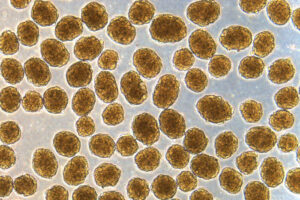
Scientists hoping to develop better treatments for kidney disease have turned their attention to growing clusters of kidney cells in the lab. One day, so-called organoids – grown from human stem cells – may help repair damaged kidneys in people or be used to test drugs developed to fight kidney disease. But new research from […]
Patients with acute myeloid leukemia (AML), an aggressive cancer of the blood, often are treated with stem cell transplantation, in which a compatible donor’s blood-forming cells are transplanted into a patient. The donor’s immune cells then attack and kill the leukemia cells. But even if this treatment initially is successful, many patients experience a recurrence […]
While studying viruses best known for infecting the brain, researchers at Washington University School of Medicine in St. Louis stumbled upon clues to a conundrum involving a completely different part of the anatomy: the bowel, and why some people possibly develop digestive problems seemingly out of the blue. The researchers found that viruses such as […]
A DNA-based analysis of blood cells soon after a stem cell transplant can predict likelihood of disease recurrence in patients with myelodysplastic syndrome (MDS), a group of cancerous disorders characterized by dysfunctional blood cells, according to new research at Washington University School of Medicine in St. Louis. Such a practice could help doctors identify patients […]
A large genomic analysis has linked certain DNA mutations to a high risk of relapse in estrogen receptor positive breast cancer, while other mutations were associated with better outcomes, according to researchers from Washington University School of Medicine in St. Louis, the Baylor College of Medicine and the University of British Columbia. The knowledge could […]
Using genetic sequencing, scientists have revealed the complete DNA makeup of more than 100 aggressive prostate tumors, pinpointing important genetic errors these deadly tumors have in common. The study lays the foundation for finding new ways to treat prostate cancer, particularly for the most aggressive forms of the disease. The multicenter study, which examined the […]
Gene therapy has gained momentum in the past year, following the federal government’s approval of the first such treatments for inherited retinal diseases and hard-to-treat leukemia. Now, research led by Washington University School of Medicine in St. Louis has shown, in mice, that genetic material can be delivered to damaged cells in the kidneys, a key step […]