Findings could help explain how asthma, COPD, severe COVID-19 are triggered
Immune cell implicated in development of lung disease following viral infection (Links to an external site)
Findings could help explain how asthma, COPD, severe COVID-19 are triggered
Researchers seek participants with diabetes that doesn’t fit type 1 or type 2 categories
Study reveals details of how coronavirus infects heart; models of tissue damage may help develop potential therapies
Research involving cytokines and how they’re packaged sheds light on inflammation in asthma, COPD, COVID-19
Washington University researchers part of team probing inflammation after heart attack
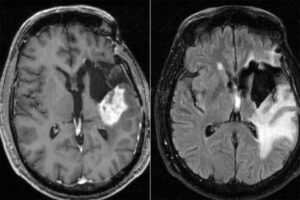
Glioblastoma study could lead to new treatments, including better immunotherapies
New grant to fund research into drugs that showed promise in small study of people with Crohn’s disease
Drugs that trigger alarm could lead to new HIV therapies
Findings could help improve treatment decisions
Medical school labs pivot to fight a common enemy
2 drugs targeting cancer cells’ energy source potentially could replace toxic chemo in osteosarcoma
Mice expressing increased levels of protein develop advanced liver disease
Measuring mitochondrial DNA could predict who will need ICU care, intubation
Newly identified pathway explains why antihistamine drugs often don’t work to control severe itch
Bacteria change surface of human intestine to benefit themselves
Discovery of receptor, generation of decoy could help contain outbreaks of Venezuelan equine encephalitis virus
New findings from researchers at Washington University School of Medicine in St. Louis suggest the eye’s cornea can resist infection from the novel coronavirus. Although the herpes simplex virus can infect the cornea and spread to other parts of the body in patients with compromised immune systems, and Zika virus has been found in tears […]
Washington University School of Medicine in St. Louis is a testing site for the Janssen Pharmaceutical Companies of Johnson & Johnson’s phase 3 clinical research study, called the ENSEMBLE trial, to evaluate the safety and efficacy of Janssen’s investigational COVID-19 vaccine candidate, JNJ-78436735, also known as Ad26.COV2.S.
One of the most vexing aspects of the COVID-19 pandemic is the novel coronavirus’s ability to turn the body’s immune system against the body. After the virus has been cleared from the body, the immune system sometimes continues to hurtle an arsenal of immune proteins at the already vanquished virus, creating a dangerous inflammatory response […]
The communities of bacteria that live in our digestive tracts help digest food and produce vitamins, protect against pathogens, and promote the healthy functioning of our immune system. But alongside gut bacteria thrives a vast community of viruses, and we know little about their impact on health and disease.
Flu season comes around like clockwork every year, and sooner or later everyone gets infected. The annual flu shot is a key part of public health efforts to control the flu, but the vaccine’s effectiveness is notoriously poor, falling somewhere from 40% to 60% in a typical year.
Flu season comes around like clockwork every year, and sooner or later everyone gets infected. The annual flu shot is a key part of public health efforts to control the flu, but the vaccine’s effectiveness is notoriously poor, falling somewhere from 40% to 60% in a typical year. A growing body of evidence suggests that […]
Scientists at Washington University School of Medicine in St. Louis have developed a vaccine that targets the SARS-CoV-2 virus, can be given in one dose via the nose and is effective in preventing infection in mice susceptible to the novel coronavirus. The investigators next plan to test the vaccine in nonhuman primates and humans to […]
Gastric bypass surgery is the most effective therapy to treat or reverse type 2 diabetes in severely obese patients. Many achieve remission of diabetes following surgery and no longer require diabetes medications. This observation has led to the theory that gastric bypass surgery has unique, weight loss-independent effects in treating diabetes, but this has remained […]
Researchers at Washington University School of Medicine in St. Louis are investigating whether a drug approved by the Food and Drug Administration (FDA) to treat rare diseases of an overactive immune system could help critically ill patients hospitalized with COVID-19. The drug blocks a specific protein of the immune system that doctors suspect contributes to […]
An experimental vaccine is effective at preventing pneumonia in mice infected with the COVID-19 virus, according to a study from Washington University School of Medicine in St. Louis. The vaccine, which is made from a mild virus genetically modified to carry a key gene from the COVID-19 virus, is described in the journal Cell Host […]
Washington University in St. Louis, the St. Louis County Department of Public Health and other collaborators are conducting a survey of St. Louis County residents and offering COVID-19 testing to gauge the prevalence of and risk factors for the illness. Working with the county, Washington University’s Institute for Public Health is teaming up with other local public health and […]
The virus that causes COVID-19 probably originated in wild bats that live in caves around Wuhan, China, and may have been passed to a second animal species before infecting people, according to the World Health Organization. Many of the most devastating epidemics of recent decades – including Ebola, avian influenza and HIV/AIDS – were triggered […]
Many children treated for childhood malnutrition in developing countries never fully recover. They suffer from stunted growth, immune system dysfunction and poor cognitive development that typically cause long-term health issues into adulthood.
Some of the most promising advances in cancer treatment have centered on immunotherapies that rev up a patient’s immune system to attack cancer. But immunotherapies don’t work in all patients, and researchers have been searching for ways to increase their effectiveness.
Chikungunya virus, once confined to the Eastern Hemisphere, has infected millions of people in the Americas since 2013, when mosquitoes carrying the virus were discovered in the Caribbean. About half of all people infected with chikungunya virus never show symptoms, while some develop fever and joint pain that lasts about a week, and 10% to […]
As U.S. scientists ramp up a national effort to evaluate COVID-19 vaccine candidates at clinical trial sites across the country, researchers at Washington University School of Medicine in St. Louis and the Saint Louis University Center for Vaccine Development have been tapped to join the historic effort to find a COVID-19 vaccine that can prevent […]
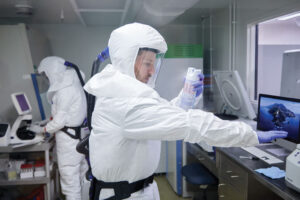
Airborne and potentially deadly, the virus that causes COVID-19 can only be studied safely under high-level biosafety conditions. Scientists handling the infectious virus must wear full-body biohazard suits with pressurized respirators, and work inside laboratories with multiple containment levels and specialized ventilation systems. While necessary to protect laboratory workers, these safety precautions slow down efforts […]
The virus that causes COVID-19 probably originated in wild bats that live in caves around Wuhan, China, and may have been passed to a second animal species before infecting people, according to the World Health Organization.
Six months into the pandemic, people diagnosed with mild cases of COVID-19 still are told to isolate themselves and wait out the infection at home. Doctors monitor such patients so they can intervene if their condition deteriorates, but no antiviral drugs have been shown to hasten recovery or forestall severe illness in people who are […]
A major U.S. study reveals large gaps between urban and rural patients in quality of care received after a stroke and rates of survival. In more rural areas, the ability of hospitals to deliver advanced stroke care is lower and mortality rates substantially higher, the research shows.
With Brazil leading the world in newly diagnosed COVID-19 cases, Latin America has become the epicenter of the coronavirus pandemic. Meanwhile, outbreaks continue to escalate in parts of Asia, Africa and the Middle East. Public health authorities worldwide desperately need to expand testing so they can track the spread of the infection, but molecular diagnostic […]
People who inject illicit drugs can develop potentially deadly infections of the heart, blood, joints and soft tissues. Typically, such infections require weeks of hospitalization to treat effectively. But a new study by researchers at Washington University School of Medicine in St. Louis shows that drug users who, while in the hospital, started IV antibiotics […]
In the weeks before the St. Louis region saw its first patients with COVID-19, physician-scientists at Washington University School of Medicine began planning and preparing how best to collect blood and other biological samples from such patients so specimens could be quickly disseminated to researchers seeking strategies to treat, prevent and contain the novel coronavirus.
The global effort to quickly develop drugs and vaccines for COVID-19 has been hampered by limited numbers of laboratory mice that are susceptible to infection with SARS-CoV-2, the virus that causes COVID-19. Now, researchers at Washington University School of Medicine in St. Louis report they have developed a mouse model of COVID-19 that replicates the […]
Using induced pluripotent stem cells produced from the skin of a patient with a rare, genetic form of insulin-dependent diabetes called Wolfram syndrome, researchers transformed the human stem cells into insulin-producing cells and used the gene-editing tool CRISPR-Cas9 to correct a genetic defect that had caused the syndrome. They then implanted the cells into lab mice […]
When Washington University Vice Chancellor for Research Jennifer K. Lodge first sounded the alarm about the disruptive impact COVID-19 likely would have on labs across the university, the research community heeded her warning, taking steps to shut down lab work and move as much as possible online. Those in position to do so began pivoting their research […]
Infectious diseases physicians at Washington University School of Medicine in St. Louis have developed an expanded access program to give blood plasma from COVID-19 survivors to critically ill patients at Barnes-Jewish Hospital in St. Louis. Led by principal investigator Rachel Presti, MD, PhD, an associate professor of medicine, a team of researchers began enrolling potential donors […]
Researchers at Washington University School of Medicine in St. Louis are launching a clinical trial in patients who have tested positive for COVID-19 but who are not sick enough to be hospitalized. The trial is investigating whether the antidepressant medication fluvoxamine, which is currently used to treat patients with obsessive-compulsive disorder (OCD), can be repurposed […]
Washington University School of Medicine in St. Louis is launching a clinical trial for patients hospitalized with COVID-19 at Barnes-Jewish Hospital. The trial will investigate the effectiveness of different combinations of the antimalarial drugs chloroquine and hydroxychloroquine and the antibiotic azithromycin in treating ill patients infected with the novel coronavirus. Express Scripts, a Cigna company, […]
With no drugs or vaccines yet approved for COVID-19 and the number of U.S. cases increasing by the thousands every day, doctors are looking to revive a century-old therapy for infectious diseases: transfusing antibodies from the blood of recovered patients into people who are seriously ill. During the Spanish flu pandemic of 1918, doctors were […]
Immunotherapy that involves treating cancer with the body’s own immune cells, or those of a matched donor, shows promise in clinical trials for some patients, but not all. A new study from Washington University School of Medicine in St. Louis suggests that the age of certain immune cells used in such therapy plays a role […]