
When Dr. Kandice Roberts, a hematology and oncology fellow at WashU Medicine, arrived at Jaramogi Oginga Odinga Teaching and Referral Hospital (JOOTRH) in Kisumu, Kenya, she expected to learn. What she didn’t anticipate was how deeply the experience would reaffirm her commitment to building long-term, sustainable partnerships in global cancer care.
“I was struck by how many patients came to the clinic with advanced disease—often stage IV cancers that were incurable by the time they sought help,” she said. “It’s something that stays with you. It highlights how access, education, and early detection can truly change lives.”
A Longstanding Commitment to Global Health
Dr. Roberts’ journey toward global oncology began long before her fellowship. As an undergraduate student, she developed a strong interest in global health and pursued related projects throughout her medical training. That passion followed her through residency and into her fellowship, where she found mentors who helped her translate her interests into meaningful impact.

“I was part of the Global Health Scholars Program during residency, so I knew I wanted to continue that focus,” she said. “When I interviewed for my fellowship at WashU, I asked right away about opportunities for global work. The administration and my interviewers were incredibly supportive—they made it a shared goal from the beginning.”

Working with Dr. Thomas Odeny, a WashU faculty member originally from Kenya and an expert in global oncology, she helped pilot a new fellowship rotation that allows trainees to collaborate directly with Kenyan clinicians and researchers.
Strengthening Data and Systems for Cancer Research
While in Kisumu, Dr. Roberts spent time observing care in oncology clinics and hospital wards, but she also helped address a critical need: data organization.
“All the records were handwritten,” she explained. “It was difficult to find key information in patient charts, and important details were sometimes missing simply because there wasn’t a standardized system.”

To help address this, she designed a face-sheet template—a simple but transformative documentation tool—to make it easier for clinicians to capture consistent patient information. The project not only streamlines care but also supports the Global Oncology Initiative led by Dr. Odeny at WashU, which collects and analyzes cancer data from partner hospitals in Kenya.
“Improving documentation means improving care,” Dr. Roberts said. “It helps providers see trends in real time and also gives researchers the data they need to study cancer patterns unique to this region.”
Formalizing a Global Partnership
Her visit coincided with a milestone moment: the formal signing of a Memorandum of Understanding (MOU) between WashU, JOOTRH, and the National Cancer Institute of Kenya. The agreement establishes a foundation for long-term collaboration in research, education, and clinical training.

“Having institutional commitment on both sides is what turns a visit into a partnership,” Dr. Roberts noted. “The goal isn’t just to send trainees abroad for a few weeks—it’s to build enduring relationships that support both sides.”
The partnership is already expanding. Plans are underway to establish a recurring fellowship opportunity in Kisumu and to open new collaborative research projects addressing the unique cancer landscape in sub-Saharan Africa.
Research That Crosses Continents
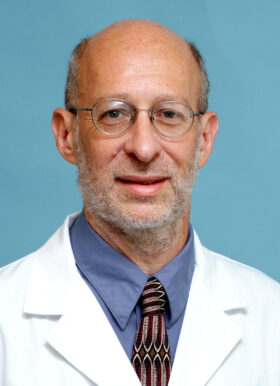
One of those efforts includes Dr. Robert’s fellowship “Letter of Intent” project – a Phase II clinical trial (“A Multicenter Phase II Study of Propranolol for the Treatment of Kaposi Sarcoma in Adults”) studying propranolol, a common blood pressure medication, as a potential therapy for Kaposi’s sarcoma—a cancer associated with HIV infection. The study, led by Dr. Lee Ratner at WashU Medicine, is open in St. Louis and will soon expand to the Kenya Medical Research Institute in Kisumu.
“Because of the higher rates of HIV in Kenya, there’s a real opportunity to learn and to help a population that is disproportionately affected,” Dr. Roberts said. “Opening this trial there will allow us to ask new questions and bring potential therapies to people who need them most.”
The research also aligns with WashU’s broader commitment to addressing health disparities through global partnerships. Beyond Kaposi’s sarcoma, the teams are exploring questions around cervical and esophageal cancers, which are more prevalent in Kenya than in the U.S. and may have distinct viral or environmental risk factors.
A Call for Continued Support
For Dr. Roberts, the experience reinforced that meaningful change in global oncology requires time, teamwork, and sustained investment.
“We don’t want this to be a short-term exchange,” she emphasized. “The goal is to provide long-term education, mentorship, and research support. We’re learning from our Kenyan colleagues as much as they’re learning from us.”
She hopes others across the institution—and beyond—will continue to champion these initiatives, whether through funding, mentorship, or advocacy.
“Supporting research and clinical partnerships in Kenya isn’t just about helping one hospital or one community,” she said. “It’s about strengthening global cancer care for everyone. By working together, we can improve outcomes across borders.”
Dr. Roberts would like to express her heartfelt gratitude to the WashU Medicine Fellowship Program, Dr. Daniel Link, Chief of the Division of Oncology, the Department of Medicine, and the Siteman Cancer Center. Their funding, approvals, and exceptional support have provided her with remarkable opportunities both locally and globally.