Innovate, collaborate, and delivering care that makes a difference

When Dr. Matthew A. Ciorba arrived at Washington University School of Medicine in 2001, inflammatory bowel disease (IBD) was still poorly understood, and treatment options were limited. Today, as director of the Washington University IBD Center, he leads one of the top programs in the nation—combining expert clinical care, groundbreaking research, and innovative education for the next generation of specialists.
Dr. Ciorba’s journey into IBD care began during his medical training at the University of Iowa. On a colorectal surgery rotation, he saw firsthand the toll Crohn’s disease and ulcerative colitis could take on patients—sometimes leaving them malnourished, in pain, and facing major surgery. “I realized this was a patient population in real need,” he recalls. “And I wanted to be part of finding better answers.”
After completing his residency and fellowship at Washington University, with additional IBD training at Mount Sinai Hospital in New York, Dr. Ciorba returned to St. Louis determined to build a comprehensive, translational program that would bridge laboratory discoveries and patient care. In 2016, he launched the Washington University IBD Center with just one other full-time clinician. Today, the team has grown to more than 50 members—including gastroenterologists with advanced IBD training, nurse practitioners, dietitians, GI health psychologists, nurse navigators, and specialists in hepatology, colorectal surgery, and radiology.
Understanding IBD and Its Symptoms
IBD—most commonly Crohn’s disease and ulcerative colitis—is a chronic, often unpredictable condition caused by abnormal immune responses that lead to inflammation of the gastrointestinal tract. Symptoms vary widely but may include abdominal pain, diarrhea or constipation, blood in the stool, weight loss, fatigue, and extra-intestinal issues such as joint pain, skin lesions, or liver complications. Prompt diagnosis and treatment can help control symptoms, reduce inflammation, and precent complications such as intestinal strictures, fistulas, or colorectal cancer.
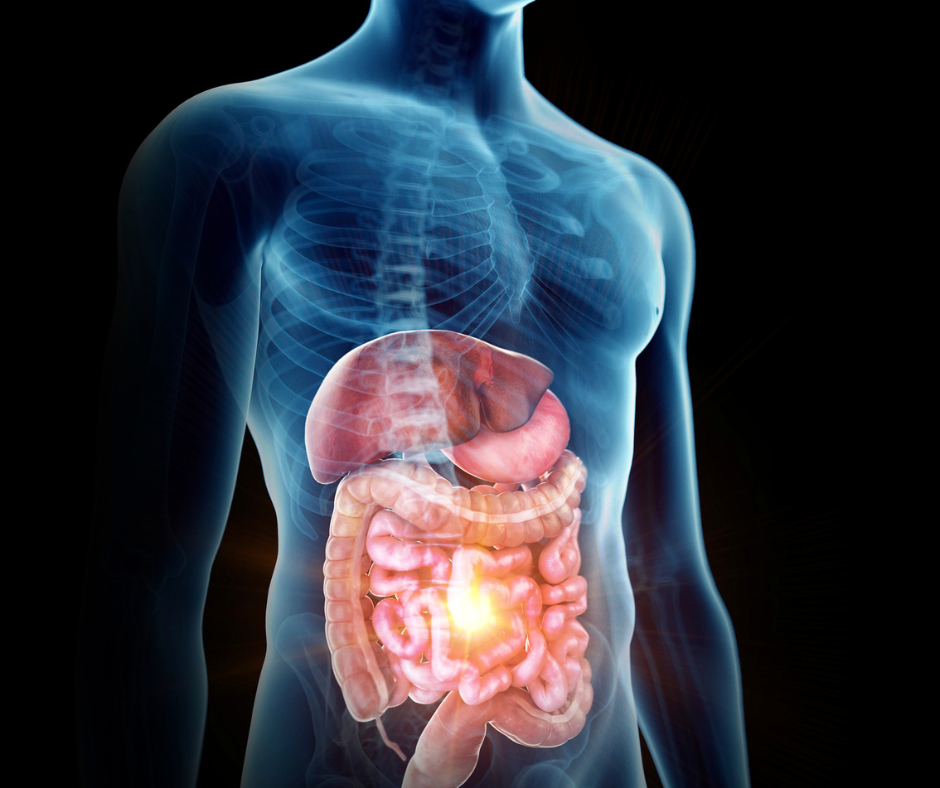
“These symptoms can be disruptive and sometimes disabling,” Dr. Ciorba explains. “But with timely diagnosis and the right treatment plan, we can greatly improve quality of life and reduce the risk of long-term complications.” He emphasizes that early intervention is key: “The earlier you treat IBD, the more likely you are to have good outcomes.”
Driving Innovation Through Research
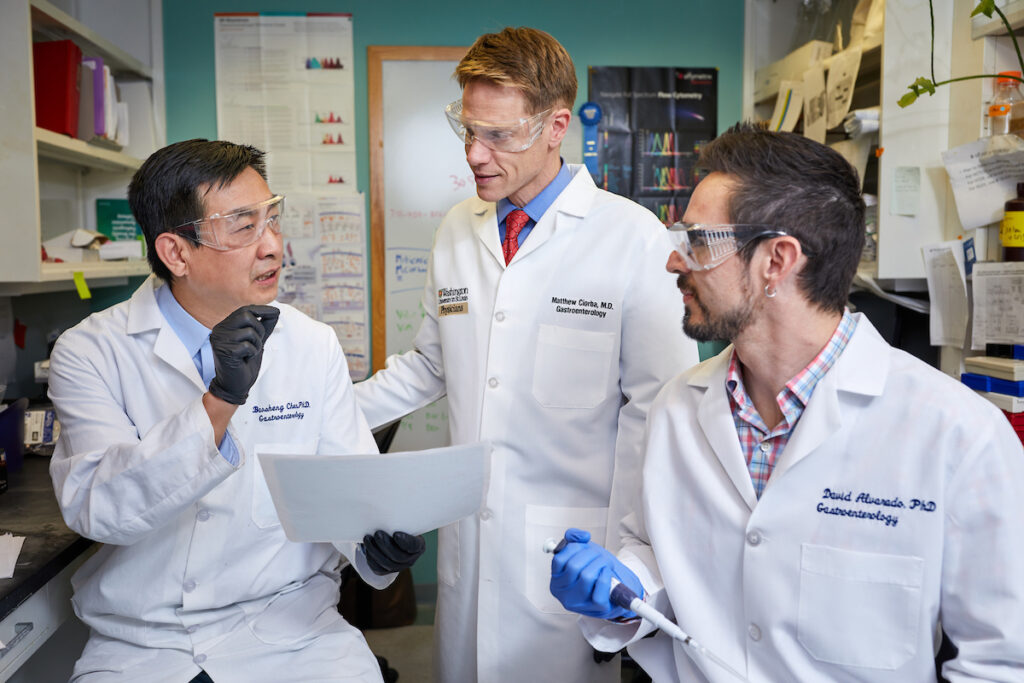
Alongside its clinical work, the IBD Center is deeply invested in research that spans basic science, translational studies, and clinical trials. Dr. Ciorba’s own research has advanced understanding of IBD-related colon cancer, the role of gut bacteria, and the impact of bile acids on inflammation. His team developed one of the first robust organoid models for studying human intestinal tissue outside the body—a tool now used in labs around the world—and helped lead Phase 2 clinical trials for a novel bile acid based therapy for ulcerative colitis and Crohn’s disease.
The center has also been at the forefront of studying the gastrointestinal effects of COVID-19, co-authoring one of the most cited papers on SARS-CoV-2 infection of the intestine, he and colleagues continue to study viral mediated intestinal pathology and its potential role in long COVID.

“Our goal is to foster cutting-edge laboratory discoveries and make sure the most promising findings make it to the clinic,” Dr. Ciorba says. “When research and patient care inform each other, you see real progress.”
Training the Next Generation
Through its dedicated IBD fellowship program, supported by philanthropy and industry partnerships, the Center trains future leaders in the field. Graduates have gone on to academic positions nationwide, expanding access to advanced IBD care far beyond St. Louis.
For Dr. Ciorba, the motivation remains personal. “Patients and their stories—both the challenges and the triumphs—are what inspire me every day,” he says. “That’s why we push to innovate, collaborate, and deliver care that makes a difference.”
With its comprehensive approach and unwavering commitment to excellence, the Washington University IBD Center is not only redefining how IBD is treated—it’s shaping the future of the field.
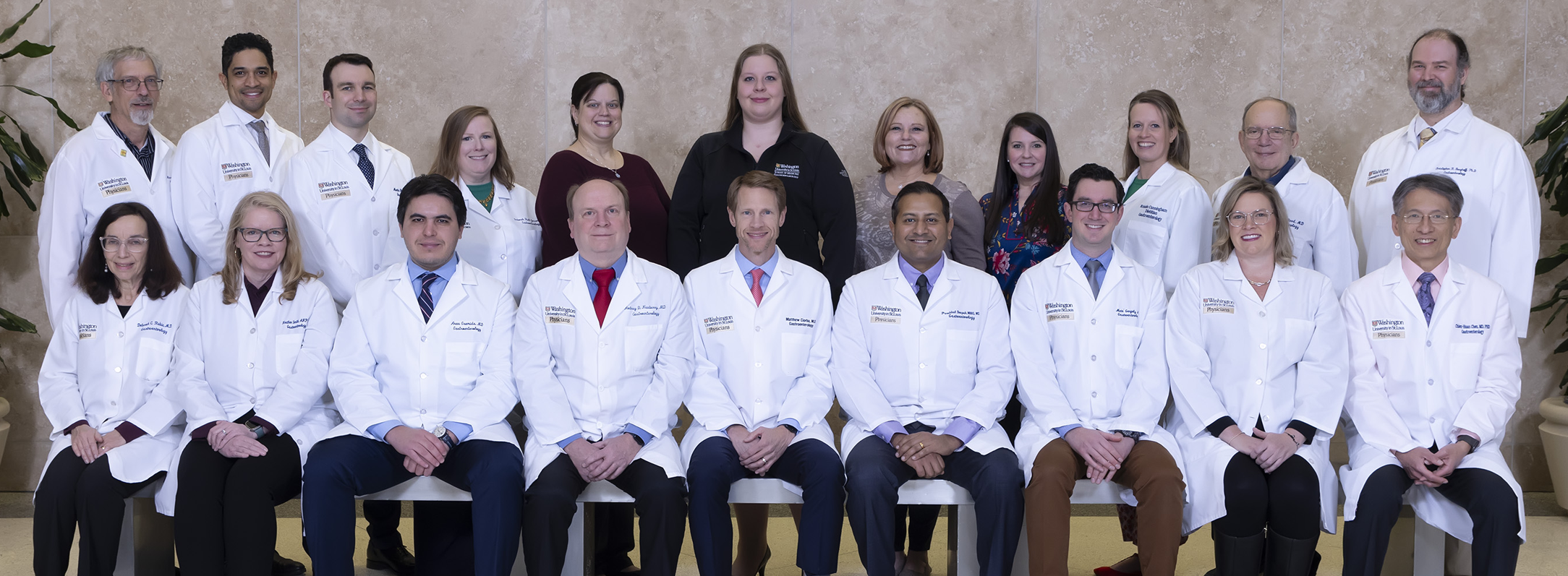
WashU Medicine Inflammatory Bowel Diseases Center
The mission of the WashU Medicine Comprehensive IBD Center of Excellence is to improve quality-of-life for IBD patients regionally and globally through an interdisciplinary approach that integrates world-class patient care with transformative research and education.
The IBD Center’s expertise, combined with the resources of WashU Medicine and Barnes-Jewish Hospital, distinguish us as a first-rate, comprehensive Center of Excellence. The center now cares for more than over 8,000 patients with inflammatory bowel disease; has more than 15 current clinical trials; numerous basic, translational, clinical & investigator initiated research projects; and provides Continuing Medical Education (CME) for physicians and healthcare practitioners locally, regionally & nationally; and hosts multiple Advanced & Visiting IBD Fellowships.