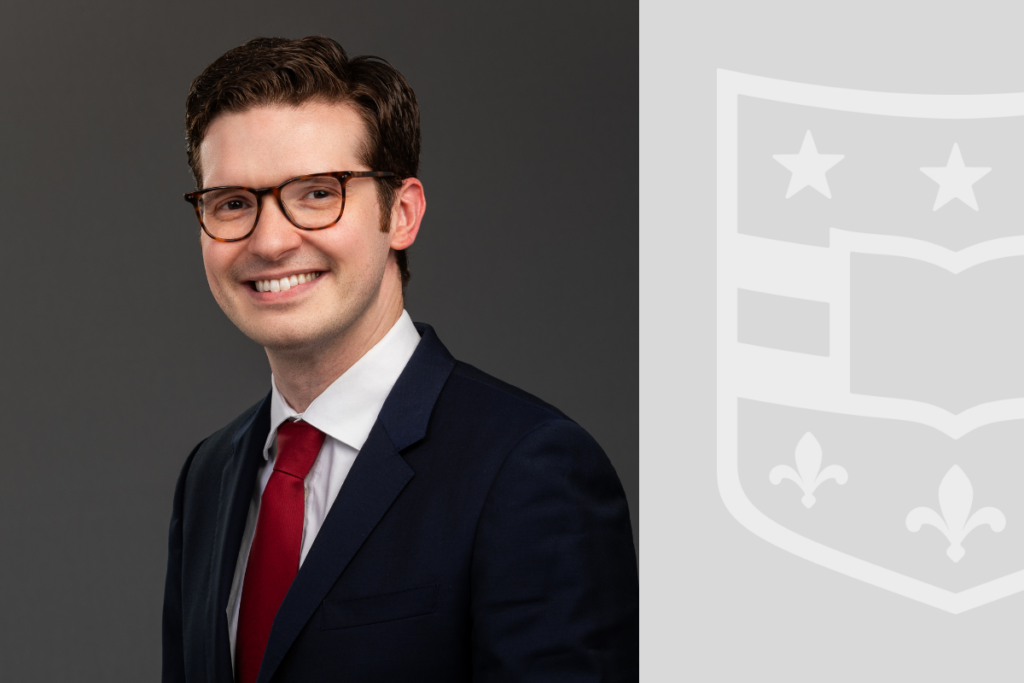
Dr. Thomas Westbrook joins the Department of Medicine in the Division of Oncology as an Assistant Professor as of August 2026.
Dr. Westbrook is also a genitourinary medical oncologist with clinical and research interests in treatment resistant advanced cancers. He received his medical degree from the University of Cincinnati School of Medicine, completed residency training in Internal Medicine at Washington University in St. Louis and Barnes-Jewish Hospital, and went on to fellowship training in hematology and medical oncology at the University of Michigan.
His clinical practice focuses on prostate, kidney, bladder, and testicular cancers. His research program centers on understanding how prostate cancer develops resistance to anti-androgen therapies, combining genomic analysis with clinical data and advanced sequencing approaches. A central interest is lineage plasticity, a resistance mechanism in which the tumor undergoes a fundamental shift in its cellular identity to escape targeted treatment. He has proposed new approaches for identifying patients at risk of undergoing lineage plasticity and is studying drug combinations aimed at blocking this process.
In parallel, Dr. Westbrook works to connect detailed genomic profiles with longitudinal clinical outcomes, with the goal of better understanding why patients respond so differently to androgen receptor pathway inhibitors and why those responses vary in durability. This work draws on tools like single-cell RNA expression profiling, spatial transcriptomics and epigenetic sequencing, which provide a fuller view of the biological changes occurring across the course of treatment. His work has been published in Nature Communications, European Urology, and Frontiers in Endocrinology, among other journals.
In kidney cancer, his research examines whether locally ablative approaches, particularly stereotactic ablative radiotherapy (SAbR), can be meaningfully combined with systemic therapies. One area of active study is in oligoprogression, where the use of SAbR to a small number of resistant metastatic sites may allow patients to continue a systemic regimen that would otherwise need to be stopped.
Dr. Westbrook also participates actively in the training of internal medicine residents and hematology/oncology fellows, contributing to both bedside teaching and curriculum development.