Powers Carson and Arora discuss negative correlations between BMI and glycated albumin  (Links to an external site)

Jennifer Powers Carson, PhD

In October of 2023, Jennifer Powers Carson, PhD and colleague, Jyoti Arora, MS of the Washington University School of Medicine, Center for Biostatistics and Data Science, had their work published by Clinical Biochemistry. The article was titled, “Glycated serum proteins and albumin but not glycated albumin show negative correlation with BMI in an overweight/obese, diabetic population from the United States.” 

AI may predict spread of lung cancer to brain (Links to an external site)

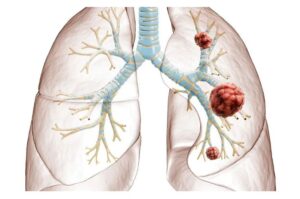
lung image

Method may inform personalized cancer treatments Physicians treating patients with early-stage lung cancer face a conundrum: choosing potentially helpful yet toxic therapies such as chemotherapy, radiation or immunotherapy to knock out the cancer and lessen the risk of it spreading to the brain, or waiting to see if lung surgery alone proves sufficient. When up […]

WashU Medicine rises to No. 2 in nation in NIH research funding (Links to an external site)

Washington University School of Medicine in St. Louis received in 2023 the second highest amount of funding from the National Institutes of Health (NIH) of all medical schools nationwide. This ranking reflects the school’s commitment to cutting-edge research and positions it as a key player in shaping the future of medicine. (Photo: Matt Miller/School of Medicine)

Ranking reflects success as thriving hub of scientific excellence, medical innovation In the realm of biomedical research, securing funding is a testament to an institution’s record of scientific accomplishments and potential for further advances to improve human health. In 2023, Washington University School of Medicine in St. Louis received the second-highest amount of funding from […]

Dr. David DeNardo Explores How the Tumor Microenvironment Affects Immune Responses to Cancer (Links to an external site)

David DeNardo, P.D

David DeNardo, Ph.D., is a Professor of Medicine and Co-Director of the Tumor Immunology Program at the Washington University St. Louis, School of Medicine.  His research team is working to understand why responses to cancer immunotherapy vary among patients. In studying and uncovering mechanisms of cancer immunology, Dr. DeNardo aims to identify strategies that can […]

Brain tumors: Fighting with targeted tools (Links to an external site)

Neurosurgeon Albert Kim, MD, PhD (center), and chief resident Adam Bevan, MD, PhD, perform a right parietal craniotomy to remove a brain tumor.

Whether malignant or benign, a brain tumor is life-altering. Malignant tumors can spread and become deadly. And benign doesn’t mean harmless; benign tumors can cause serious problems such as paralysis, seizures and personality changes depending on which parts of the brain they affect.