
Page Index: Division of Gastroenterology | Department of Medicine | Washington University School of Medicine | BJC HealthCare | Barnes-Jewish Hospital | The St. Louis Region | Nominations & Application Procedure
The Chief, Division of Gastroenterology (GI) will lead and grow successful clinical, educational, and research programs in the Division of Gastroenterology.
The Division of Gastroenterology was formed over 50 years ago and now has over 60 faculty, successful clinical practices in Gastroenterology and Hepatology, outstanding teaching, and a robust extramurally funded research program.
The Chief of Gastroenterology will promote excellence in clinical practice, teaching, and research. The Chief will be responsible for growing the clinical care activities in the Division to meet the needs of educating medical students, residents and fellows, and to meet the growing need for high quality GI physicians affiliated with Washington University’s busy medical specialty practices. The Chief will support and advance the successful medical education mission of the Division and expand training opportunities in clinical research and teaching at Barnes-Jewish Hospital, other BJC HealthCare hospitals and Washington University School of Medicine (WashU Medicine). The Chief will also nurture the strong extramurally funded basic science, clinical and translational research programs within the Division.
The Chief will be recognized as an outstanding leader in GI, with the ability to support and grow clinical, research, and education domains. The Chief will oversee the outpatient and inpatient clinical enterprises of the Division, including expansion of high quality, accessible GI and Hepatology outpatient care to support the academic training and research missions of the University.
In the clinical realm, the Chief will recruit outstanding physicians, oversee exemplary GI care, and will expand outpatient and inpatient services to better serve the clinical needs of the BJC HealthCare hospitals and WashU Medicine.
For the educational mission, the Chief will provide oversight and support for Division faculty and staff who provide undergraduate and graduate medical education including rotations, and GI fellowships
The Chief will also oversee basic science, clinical and translational scholarship and research within GI, including hiring new faculty who will become independent investigators. GI research faculty possess strong and wide collaborations across multiple Divisions, Departments, Programs and Schools at WashU. Areas of potential growth include clinical translational research in liver disease (including MASLD and HCC), GI cancers broadly but with emphasis on foregut (esophageal, gastric and pancreatic) and colorectal cancer, and the applications of artificial intelligence in digestive and liver disease. A major strength of the GI Division is in its programs in Inflammatory Bowel Disease and the new leader will be expected to consolidate and build upon this foundation.
The Chief is responsible for faculty recruitment including clinician track and investigator track faculty and is responsible for nurturing and supporting their development. The Chief is tasked with oversight of all administrative functions of the Division including financial operations, infrastructure, and personnel.
Organization:
The Chief reports to the Chair of the Department of Medicine, Dr. Victoria Fraser. Of the 65 faculty members of the GI Division, there are 43 clinician track (42 MD, 1 PhD), 9 investigator track (MD/MD-PhD), 4 research track (all PhD), 2 advanced fellow/instructors, 5 full-time VA, and 2 Emeritus faculty. The Clinical side of the Division is organized into sections, each led by a section head who reports to the Chief. The clinical sections are General GI, Hepatology, Interventional Endoscopy, Neurogastroenterology and Inflammatory Bowel Disease. The Clinical Divisional leadership also includes the Fellowship Program Director.
Qualifications:
Candidates must be certified by the ABIM and hold an MD or equivalent degree and should be at the Professor rank. The successful candidate will be a visionary leader in GI, recognized for clinical and research excellence, have demonstrated a commitment to medical education, promoting scholarship, research, and career development opportunities for students, residents, fellows, and faculty members. Candidates should have significant leadership experience and mentoring skills necessary to support and grow the Division. Candidates should also have a significant record of accomplishment in research, and the ability to support, mentor, and recruit faculty pursuing research across varied topics relevant to GI. The ability to recruit, develop, mentor and manage faculty and staff across the clinical, research and education missions is essential.
Division of Gastroenterology
Inpatient Locations & Services
The clinical practice for inpatient services is almost exclusively located at Barnes-Jewish Hospital (BJH). There is a small inpatient practice at Barnes-Jewish West County Hospital (BJWCH), predominantly for inflammatory bowel disease patients requiring a brief hospital stay and who do not require 24/7 imaging or ICU monitoring.
Outpatient Locations & Services
Our outpatient practice includes Barnes-Jewish Hospital, Barnes-Jewish West County Hospital, Missouri Baptist Medical Center (MBMC), and South County locations as well as an offsite location at Cape Girardeau (1429 N Mount Auburn Rd, Cape Girardeau, MO 63701) for hepatology. We offer comprehensive services at BJH and BJWCH for the entire range of digestive and liver disorders including interventional endoscopy (pancreatico-biliary disorders), bariatric endoscopic procedures and clinic, Inflammatory Bowel Disease, hepatology, and general gastroenterology. The South County location offers clinics in inflammatory bowel disease, hepatology, and general gastroenterology. The MBMC location is currently confined to services focusing on interventional endoscopy (pancreatico-biliary disorders), and Inflammatory Bowel Disease.
Our overarching mission is to promote collaborative, multidisciplinary basic and translational research focused on interactions between host and environment in digestive and liver disease. The GI Division has 9 Investigator-track faculty, all with sustaining, extramural grant funding. In addition, there are three clinical translational investigator faculty with robust, extramurally supported programs in pancreatic cystic disease, MASLD, and IBD clinical trials.
Research in the GI Division is embedded in our Digestive Disease Research Core Center (DDRCC), which supports enabling technology and promotes the basic and translational research interests of its 55 Full and 17 Associate members, while nurturing the career development of junior investigators. The Research Base interests are organized around three mechanistic themes: (1) Host-microbial interactions, inflammation, and mucosal immunity; (2) Stem cells, epithelial renewal, and cancer; (3) Metabolic homeostasis, nutrient transport and enterohepatic signaling. We maintain three Biomedical Cores that leverage institutional resources to provide cost-effective infrastructure. These Cores include (1) Tissue Analysis and Advanced Imaging Core (TAnIC), which provides sophisticated imaging technologies; (2) Organoids and Gene Editing Core (OGEC), which provides organoid technologies and gene editing services; and (3) a Biobank and Big Data Core, which provides access to clinical biospecimens and leverages data warehouse analysis. The NIDDK-funded WashU DDRCC was recently renewed for 5 years (2025-2030).
In the most recent academic year, GI Division faculty generated 168 investigator-initiated publications (44 IF>10) in journals including, Lancet, Nature, Nature Medicine, Gastroenterology, Gut, Hepatology, Clinical Gastroenterology and Hepatology in areas spanning gastric metaplasia, primary sclerosing cholangitis, inflammatory bowel diseases, pancreatic cysts, disparities in cancer treatment and gastroesophageal reflux disease.
The Division manages a clinical elective for undergraduate students and IM residents to experience inpatient and outpatient clinical GI-Hepatology. The GI module for phase 1 medical students in the Gateway curriculum, academic year 2024, received an overall student satisfaction score of 4.4/5, with 92% of the students feeling satisfied or very satisfied. Thirteen GI faculty were involved in teaching during the module and received a combined rating of 4.2/5. The GI Division also works with phase 1 medical students as part of their procedural immersions and with phase 3 medical students as they rotate on the inpatient clinical service during phase 3 electives.
Our GI Fellowship admits 8 categorical trainees per year (24 total), who rotate at our BJH and BJWCH locations as well as the St Louis VA. In addition to these 8 GME approved positions, the Division offers an ACGME approved advanced Hepatology training slot (usually 1 per year) and advanced fellowships in Interventional Endoscopy (1-2 per year) and Inflammatory Bowel Disease (1-2 per year). The GI Division has a longstanding (51 yr) NIH supported T32 training program that supports two postdoctoral trainees per year (4 total) and 1-2 predoctoral trainees. Our T32 program was recently renewed for 5 years (2025-2030).
Over the last 10 years, 82% of our foundational GI fellowship graduates have matriculated into academic programs. Over the last 10 years of T32 supported fellows, 19/20 (95%) of postdocs converted to faculty positions, and 35% (7/20) were recruited to WashU. Over the last 10 years, our advanced hepatology fellowship has matriculated 8 fellows, 7 (87%) to academic positions; our interventional fellowship has matriculated 18 fellows, 15 (83%) to academic positions.
Department of Medicine
Founded in 1910, the department has maintained a proud tradition of excellence for well over a century. The tripartite mission of patient care, research, and education serves as the foundation for the activities of our faculty, staff and trainees. The Department seeks excellence by pursuing discovery research and new knowledge to improve medical care and foster the next generation of physician-scientists, clinicians and educators.
The Department of Medicine has a long and honored history of research in basic, clinical and translational sciences. Biomedical research in the department extends from fundamental cellular and molecular biology to first in human studies, clinical trials, health services, and outcomes research. Basic research focuses on the pathophysiology, genetic and immunologic determinants of disease leading to new diagnostics, drugs, technologies, devices and vaccines. Clinical and translational research spans across broad disciplines addressing complex diseases including cancer, diabetes, pulmonary, cardiovascular, renal, gastrointestinal and infectious diseases in individuals and populations. Through the Institute of Clinical and Translational Sciences (ICTS) and the Washington University community, faculty consistently bring medicine from the bench to the bedside, and from the bedside to the bench.
The educational mission of the Department of Medicine is to train exceptional physician-scientists, clinicians and educators who will be future leaders in all aspects of academic medicine. The Department has a longstanding tradition of providing the highest caliber training to medical students, graduate students, residents and fellows in the early stages of their careers. The department is committed to the development of research-oriented physician-scientists, clinically oriented researchers, clinicians and clinical educators.
The Department of Medicine takes great pride in providing unparalleled, comprehensive, and innovative patient care. The department’s clinical excellence is continually recognized by national surveys, which rank the Department of Medicine among the best in the nation.
In union with the core values of the School of Medicine, the Department of Medicine is committed to creating an inclusive and collaborative environment in which everyone can grow and thrive. Within the department, specific efforts are underway to actively recruit, retain, support, and promote the success and career development of individuals of all backgrounds.
Washington University School of Medicine
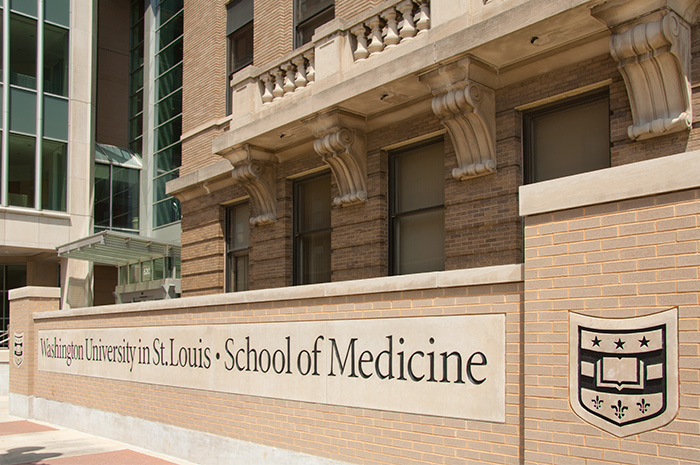
WashU Medicine is committed to advancing human health throughout the world. Comprised of leaders in education, research and patient care, the School of Medicine’s outstanding faculty has contributed many discoveries and innovations to science and medicine. The school pioneered bedside teaching and led in the transformation of empirical knowledge into scientific medicine.
WashU Medicine by the Numbers, 2023
- Founded in 1891
- Economic impact: $8.7 Billion
- Departments: 21
- Alumni: 286,979
- NIH funding: $583.6M – #2 in U.S.
- Patent filings (FY2022): 491
- Nobel winners: 19
- Clinical sites: 130
- Specialties: 78
- Outpatient visits: 1.6M
- Total Students: 1,411
The School of Medicine’s long history of medical breakthroughs includes serving as a major contributor of genome sequence data to the Human Genome project. Other breakthroughs include developing screening tests used worldwide to diagnose Alzheimer’s disease; creating the first positron emission tomography (PET) scanner; proposing the now-common practice of taking aspirin to help prevent heart attacks, and helping to pioneer the use of insulin to treat diabetes. Ongoing research strengths include decoding the genomes of hundreds of cancer patients, neurosciences research including Alzheimer’s cause, diagnosis, and treatment, research in infectious diseases, immunology, microbiology, cancer, nanoparticles, personalized medicine and molecular imaging research. Washington University physicians, researchers, and graduate students continue to contribute major discoveries and innovations in the fields of science and clinical medicine.
Education has remained a high priority for the School of Medicine, a posture it has sustained for over a century. For over a century, the School of Medicine has been consistently recognized as one of the country’s premier medical schools. It ranks first in the nation in the entering scores of its medical school classes and its graduate medical education programs attract an exceptional group of residents and fellows as trainees.
In addition to the highly ranked MD and MD PhD programs, programs in occupational therapy, audiology and communication sciences, and physical therapy, are among the highest ranked in the country and serve as leaders in their respective fields in clinical care, research and education.
BJC HealthCare
BJC HealthCare, the clinical partner of Washington University School of Medicine, provides comprehensive medical care, medical education, medical research programs, and ranks as one of the largest nonprofit healthcare systems in the United States.
In 2024, Washington University and BJC – longtime partners and leaders in providing world-class clinical care powered by leading-edge scientific research – approved a new agreement that establishes a long-term 45-year commitment between the two organizations. The new affiliation agreement went into effect on January 1, 2025. While Washington University and BJC remain distinct entities with their own senior leadership and boards, the agreement enables them to work more closely together to bring the power of academic medicine to all the communities they serve. By pushing the boundaries of discovery and innovation, WashU Medicine and BJC will continue to meet the health needs of patients today while advancing medicine and the delivery of care far into the future. Critically, this agreement also reinforces their role as an essential provider of safety-net care for vulnerable urban and rural populations in the region.
The agreement codified a number of coordinated strategies, including those designed to:
- Better align clinical operations to enhance their ability to deliver the best outcomes for patients.
- Unify and coordinate strategy and planning across WashU Medicine and BJC’s East Region to provide leading-edge care to more patients.
- Improve the health of the community, reduce health disparities and address the social determinants of health where possible.
- Embrace an inclusive, pluralistic provider model that supports and coordinates WashU Medicine’s Faculty Practice Plan, BJC Medical Group, and independent physicians to ensure greater and more equitable access to care across the region.
- Improve efforts to attract and retain the best talent locally, regionally, nationally and from around the world.
- Help reduce the cost of care overall while fostering growth that bolsters the regional economy.
The agreement established the Physician Practice Organization (led by the CEO of the Faculty Practice) as a full partner within the hospital enterprise. WashU and BJC are now full academic and clinical partners with shared clinical margins.
Barnes–Jewish Hospital
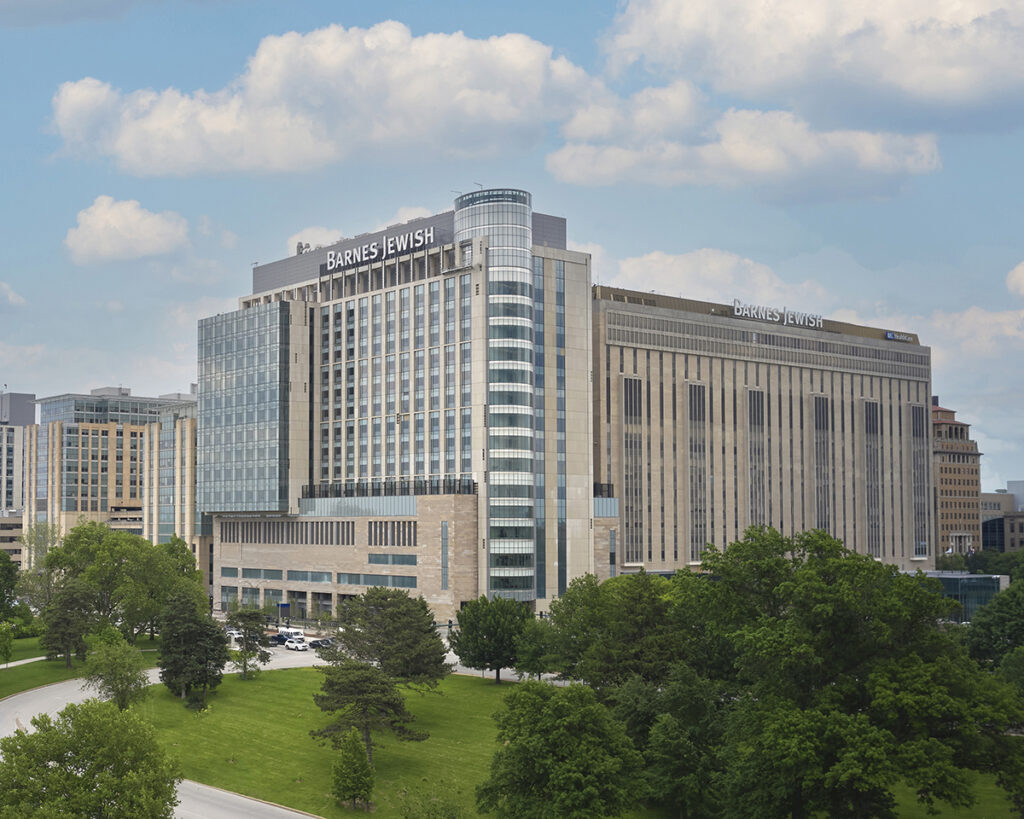
Consistently ranked among America’s best hospitals by U.S. News & World Report, Barnes-Jewish is a nationally recognized academic medical center with exceptional quality and unmatched experience for patients needing all levels of care, from the most common to the more complex. In partnership with Washington University School of Medicine – and with more than 1,800 physicians – it is the largest hospital in Missouri caring for communities that extend across the country.
A teaching hospital staffed by Washington University physicians, Barnes-Jewish is internationally recognized for its leading-edge therapies and commitment to educating the next generation of medical professionals. Barnes-Jewish is also the first hospital in Missouri to be designated as a Magnet hospital in 2003 by the American Nurses Credentialing Center for excellence in nursing and has been re-designated consistently since.
Barnes-Jewish also serves as a safety net hospital for the city of St. Louis, with a mission to care for the underserved and underinsured in the diverse communities of the St. Louis metro area, where many people have no access to health care apart from Barnes-Jewish – and the hospital is proud to provide urgently needed services to these populations.
The St. Louis Region

As the second-largest employer in the metropolitan area and with an economic impact that totals $9.3 billion, WashU is an essential institution for St. Louis, and the city’s prosperity is essential to WashU. The university has provided innovative leadership, and the entire region counts on the university as a key partner for its success. The St. Louis region boasts a remarkable concentration of world-class research institutions and nationally ranked accelerator programs, making it a magnet for entrepreneurship in both medical and plant sciences. At the heart of the region’s innovation district, Cortex, WashU Medicine drives the translation of scientific breakthroughs into real-world therapeutics and clinical care. The city’s rapidly evolving startup community continues to attract new enterprises, talent, and investment, fueled by its moderate cost of living and access to cutting-edge lab space. This unique combination of affordability, advanced infrastructure, and proximity to farmland positions St. Louis as an ideal location for solving critical challenges in healthcare and agriculture.
Beyond its professional appeal, St. Louis offers a high quality of life, consistently ranked among the most beautiful and affordable places to live and build a career. Its eclectic neighborhoods, rich cultural scene, and vibrant culinary and entertainment offerings provide the perfect blend of big-city excitement and small-town charm. The St. Louis region has excellent schools and offers many opportunities to watch or participate in a wide range of sports, recreational activities, and cultural events. St. Louis is highly accessible, and there are more free, world-class attractions in the city than any place in the U.S. outside of Washington, D.C., largely due to the area’s active philanthropic community. Newcomers are often pleasantly surprised by the city’s character and livability, making it not only a place to work and innovate but also a place to thrive.
For more about St. Louis, visit:
Nominations & Application Procedure
The search committee welcomes inquiries, nominations, and applications. To receive full consideration, interested individuals should electronically submit a Curriculum Vitae and a letter of interest. The letter of interest should detail the applicant’s relevant leadership experience and key achievements related to this position and perspectives on how the applicant will contribute to the initiatives and responsibilities described in this position specification. Letters should be addressed to the Washington University Search Committee. Materials will be reviewed immediately and will continue to be reviewed until the position is filled.
Or email their CV and cover letter to:
Clay F. Semenkovich, MD
Irene E. and Michael M. Karl Professor of Medicine
Chief, Division of Endocrinology, Metabolism & Lipid Research
Director, Diabetes Research Center
Washington University in St. Louis
csemenko@wustl.edu
Washington University is an Equal Opportunity Employer. We are committed to the recruitment of candidates traditionally underrepresented on university faculties. Individuals of any race, ethnicity, gender, or sexual orientation are encouraged to apply, as are disabled individuals and veterans. The School of Medicine at Washington University is committed to finding solutions to global health problems, including ones that affect disadvantaged populations.