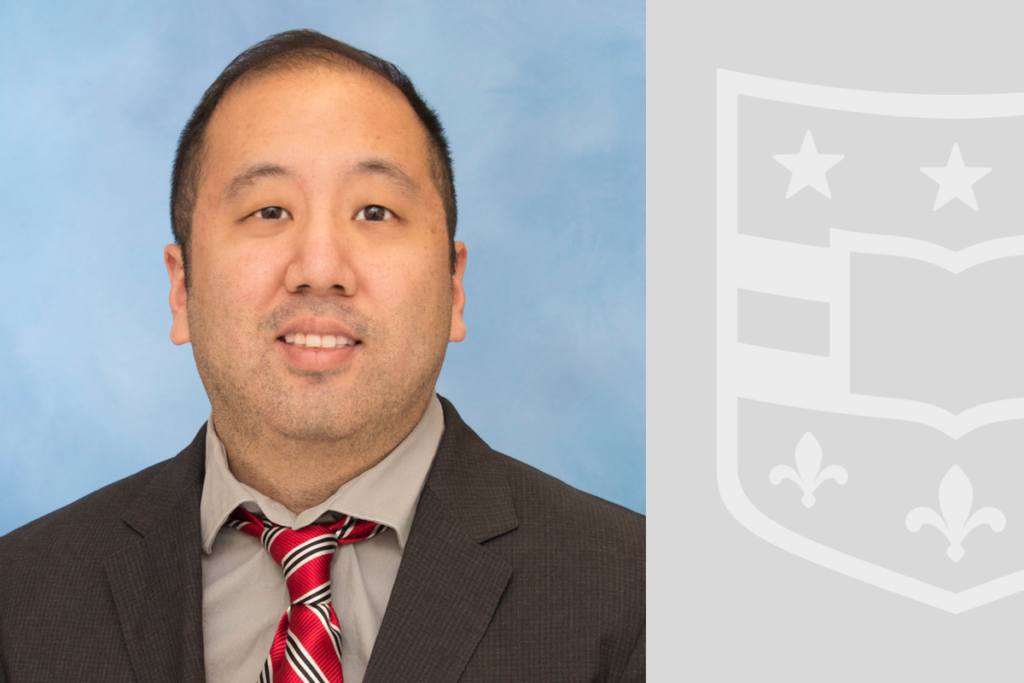
Dr. Terrence Wong joins the Department of Medicine in the Division of Oncology as an Assistant Professor as of July 2026.
Terrence Wong, MD, PhD, received his PhD in Biochemistry and Molecular Biology at The University of Chicago. In the laboratory of Dr. Tao Pan, he investigated how long non-coding RNAs fold into their native structures while being actively transcribed. After receiving his MD PhD, he trained as an internal medicine resident and hematology/oncology fellow at Barnes-Jewish Hospital/WashU Medicine, gaining a clinical interest in the treatment of hematologic (specifically myeloid) malignancies.
At WashU Medicine, Dr. Wong performed his post-doctoral research in the laboratory of Dr. Daniel Link. He initially focused on the genetics of therapy-related AML/MDS (t-AML/t-MDS), myeloid malignancies emerging after the previous receipt of cytotoxic chemotherapy or radiation. Such malignancies are enriched in somatic TP53 mutations. Dr. Wong discovered that HSCs with aging-associated TP53 mutations were present prior to any cytotoxic therapy exposure. These TP53 mutant HSCs gain a fitness advantage under the stress of cytotoxic therapy, clonally expanding, and later evolving into t-AML/t-MDS. Since this discovery, the clinical significance of clonally expanded mutant HSCs (e.g. clonal hematopoiesis) has become one of the most heavily researched areas of hematopoiesis. In Dr. Link’s lab, Terrence continued his research into how HSCs respond to cytotoxic stress, discovering that, with exposure to cytotoxic therapy, HSCs harboring mutations in certain DNA damage response genes gain a competitive advantage against their wild-type counterparts. He also continued his research into the molecular mechanisms of leukemogenesis, identifying how mutations in the microRNA MIR142 promote leukemogenesis through the de-repression of HOX genes.
At the University of Michigan, Dr. Wong has continued his research into the molecular mechanisms of leukemogenesis. His main research interest has focused on the hematopoietic role of SRCAP, a DNA damage response gene he identified as recurrently mutated in clonal hematopoiesis. Using a novel mouse model with hematopoietic-specific loss of Srcap, he determined this gene to be essential for hematopoietic maturation and HSC repopulating ability. He also determined that SRCAP plays critical roles in cell cycle progression and the response to replicative stress. Additionally, he has continued his studies of the clinical impacts of mutant hematopoietic populations, assessing the impact of clonal hematopoiesis on COVID-19 patients and working with the University of Michigan bone marrow transplant group in developing a clinical trial against TP53 mutant AML.